05/14/2026
For many homeowners in Jacksonville, the terms trimming and pruning are used interchangeably to describe cutting branches. However, if you are a property owner in Northeast Florida, understanding the technical and biological differences between these two services is essential for protecting your home and your landscape’s longevity.
In our unique subtropical climate, where trees grow at an accelerated rate due to high humidity and intense sun, making the wrong type of cut can lead to rapid decay or structural failure. This guide explores the Who, How, and Why of professional tree maintenance, specifically tailored to the species and challenges of the First Coast.
At its simplest, the difference between trimming and pruning lies in the intent.
Trimming is essentially the landscaping side of tree care. It is focused on the exterior perimeter of the plant. The goal is to maintain a specific shape, size, or boundary. In the Jacksonville area, trimming is most commonly applied to:
Pruning is a specialized arborist service that addresses the internal structure and biological health of the tree. It is a targeted intervention designed to remove specific branches for the benefit of the whole organism. Pruning requires a deep knowledge of tree biology, specifically how a tree compartmentalizes (seals) a wound. We prune to:
Northeast Florida presents environmental stressors that differ significantly from the rest of the country. Our Growing Zone 9 means trees rarely go into a deep, frozen dormancy, leading to unique maintenance requirements.
Because of our extended growing season and high annual rainfall, species like the Water Oak and Laurel Oak grow exceptionally fast. This rapid growth often results in weak wood that is prone to internal rot. Simple exterior trimming often masks these internal issues. A professional pruning assessment looks past the outer leaves to find the hollows and decay that thrive in our humid climate.
For properties in Atlantic Beach, Neptune Beach, or along the St. Johns River, salt spray is a constant factor. Salt can desiccate leaves and weaken the structural integrity of certain species. Proper pruning helps clear away salt-damaged tissue and encourages the growth of more resilient interior foliage, which is protected by the outer canopy.
When you prune a tree, you are creating a living wound. How that wound is made determines if the tree lives for another 100 years or dies within five.
One of the most common search engine-first mistakes homeowners make is hiring an uncertified crew that offers to top their trees to reduce height. Topping involves cutting the main trunk or major limbs at random intervals. This triggers a survival mechanism where the tree sends out dozens of water sprouts. These sprouts are weakly attached and grow incredibly fast, making the tree more dangerous in a storm.
Similarly, Lion’s Tailing – the practice of stripping all the interior branches and leaving foliage only at the very ends of the limbs is catastrophic. This shifts the center of gravity to the tips, making limbs much more likely to snap under the weight of a Northeast Florida thunderstorm.
In Jacksonville, tree care is a matter of public safety. Every June through November, our urban forest is put to the test by tropical systems.
A dense, unpruned Southern Live Oak acts like a massive sail in the wind. If the wind cannot pass through the canopy, the pressure is transferred to the root plate, leading to a blow-down where the entire tree uproots. Crown thinning is a specific pruning technique that removes small, interior branches to create windows for wind to pass through. This reduces the total wind load on the tree while maintaining its natural shape and shade.
Deadwood refers to branches that are no longer living but remain attached to the tree. In a high-wind event, these are the first things to become projectiles. Pruning to remove deadwood is the single most effective way to protect your roof and windows before storm season begins.
To ensure you are receiving People-First quality care, always ask your contractor if they follow ANSI A300 standards. These are the national performance standards for the care of trees, shrubs, and other woody plants.
Compliance with ANSI A300 ensures that:
Keeping your landscape healthy and safe takes the right experience and steady, proactive care. At My Florida Tree Guys, we provide trusted tree services in Jacksonville and Northeast Florida, helping homeowners and property managers across Duval, Nassau, and Clay Counties with everything from routine maintenance to emergency tree work and hazard mitigation.
My Florida Tree Guys is locally owned and fully insured, offering expert trimming & pruning services. We also provide arborist-guided health assessments with transparent, flat-rate pricing with no hidden surprises. Whether you are in Callahan or the heart of Jacksonville, our team is equipped with the professional tools and knowledge to protect your property and your canopy. We pride ourselves on clean, efficient workmanship and even offer flexible financing to make essential tree care accessible.
We strongly advise against it. Any branch that requires a ladder or a chainsaw is a high-risk task. Professional arborists use specialized rigging and safety gear to prevent falls and property damage.
Pruning is generally more expensive because it requires a higher level of skill and more time to assess the tree’s health. In Jacksonville, expect to pay $450–$1,200 for a thorough structural pruning of a mature hardwood.
If done correctly (following ANSI A300 standards), pruning actually extends the tree’s life. However, removing more than 25% of the live canopy at once can shock and potentially kill a tree.
The combination of sandy soil, high annual rainfall, and 200+ days of intense sun creates an eternal spring growth cycle, necessitating more frequent maintenance than in northern climates.
This is a pruning technique focused specifically on removing dead or decaying branches. It is the most important service for storm preparation in Duval County.
No, routine maintenance pruning does not require a permit. However, if pruning is so severe that it constitutes effective removal, city ordinances may apply.
Prune early! Structural training of young trees is much cheaper and prevents the need for expensive, high-risk pruning or removal later in the tree’s life.
This is a pruning method used to reduce the height or spread of a tree by cutting back to lateral branches that are at least one-third the diameter of the limb being removed.
| Goal | Service Required | Frequency (N. Florida) |
|---|---|---|
| Maintain hedge shape/curb appeal | Trimming | 2–3 times per year |
| Remove dead or broken limbs | Pruning (Deadwooding) | Immediately / Annually |
| Prepare for hurricane winds | Pruning (Thinning) | Every 3 years |
| Clear limbs off the roof/gutters | Trimming (Clearance) | As needed |
| Fix a leaning or unbalanced tree | Pruning (Structural) | Every 3–5 years |
To successfully navigate the choice between tree trimming and pruning in Northeast Florida, you must transition from reactive landscaping to a strategy of preventative structural engineering. The definitive solution for Jacksonville homeowners is to prioritize canopy thinning and weight reduction over simple exterior trimming. While trimming maintains your property’s immediate curb appeal, only professional pruning addresses the internal wind-sail effect that leads to catastrophic uprooting during hurricane season.
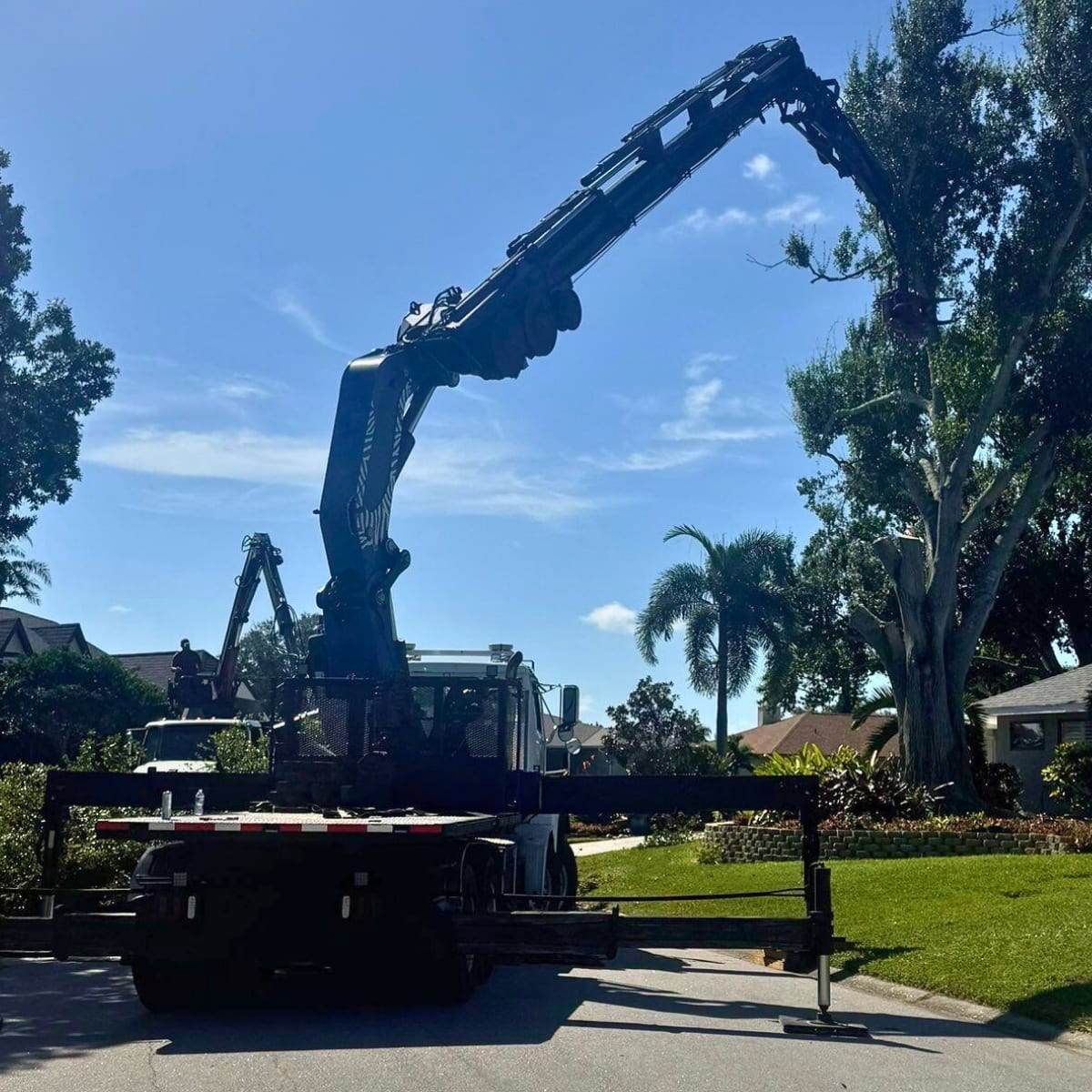
It is advisable to establish a three-year structural pruning cycle for all mature hardwoods, focusing on removing included bark and reducing end-weight on overextended limbs. This proactive approach ensures that high-velocity winds can pass through the canopy rather than pushing against it. By investing in these surgical, biological interventions now, you effectively storm-harden your property, significantly reducing your long-term insurance liability and preventing the five-figure costs associated with emergency crane removals. In the unique, high-growth climate of the First Coast, the most cost-effective solution is always the one that prevents a hazard before the first tropical warning is ever issued.
This article has been reviewed by a licensed arborist to ensure all information regarding tree care and storm safety is accurate and up to industry standards.
Want an easy way to save on tree care? Tell your friends, family, or neighbors about My Florida Tree Guys and earn up to $250 for every successful referral.