
05/13/2026
Key Takeaways
- Early Assessment: Inspecting trees in late spring is the best way to prevent emergency removals during a storm.
- Red Flag Identification: Look for signs of root heaving, deep trunk cracks, and hollow cavities.
- Proper Pruning: Thinning the canopy allows wind to pass through rather than pushing the tree over.
- Legal Protections: Florida Statute 163.045 allows for the removal of high-risk trees without a permit if documented by an arborist.
- Professional Help: Hiring licensed and insured experts ensures high-risk limbs are handled safely before the wind picks up.
If you live in Nassau County, you probably love the thick green canopy that defines places like Callahan, Yulee, and Fernandina Beach. Our massive live oaks and towering pines are a huge part of why Florida feels like home. But let’s be real: those same trees become a massive source of anxiety once the local news starts tracking a system in the Atlantic. Every single year, we see the same thing happen: a tree that looked perfectly fine on a sunny Tuesday ends up resting in someone’s living room by Friday night.
The truth is that hurricane prep isn’t something you can do when the wind is already gusting at 40 miles per hour. By then, the ground is usually a swamp, and every tree crew in the state is already booked solid. Real storm readiness starts months before the clouds turn grey. This guide is a straightforward checklist to help you walk your property and spot the ticking time bombs before the weather forces your hand.
Why Trees Fail During Florida Storms
It helps to understand the physics of a hurricane. A tree with a thick, dense canopy acts exactly like a sail on a boat. When a 90 mph gust hits that canopy, the force has to go somewhere. If the wood is flexible and the roots are deep, the tree just bends. But if the tree has internal rot or the roots are shallow, the trunk either snaps like a toothpick or the whole thing uproots.
In our part of the state, we deal with a lot of sandy soil. When hurricane rains saturate that sand, it turns into a slurry. If your tree is already leaning or has a compromised root system, it doesn’t take much to tip it over. That is why identifying structural issues early is the only way to protect your roof and your family. Species like the Laurel Oak are particularly notorious in Florida; they grow fast and look beautiful for 40 years, but they tend to rot from the inside out, making them high-risk candidates during hurricane season compared to the more resilient Live Oak.
Your Pre-Season Walkthrough: What to Look For
Grab a cup of coffee and walk around your yard. Don’t just look at the leaves; look at the bones of the tree. You are searching for specific red flags that indicate the tree might not make it through a Category 1 or higher.
Check the Root Flare
The most important part of the tree is the part you can’t fully see. Look at the base where the trunk meets the dirt. Do you see mushrooms or weird, shelf-like fungus growing there? That isn’t just a sign of moisture; it is a sign that the roots are decaying. If the roots are rotting, the tree has no anchor. You should also look for heaving soil. If the ground looks like it’s lifting on one side, the tree is already on its way out. Pay close attention to any recent construction or trenching near the tree; cutting even a few major roots for a new walkway can destabilize a 50-foot pine.
Inspect the Trunk for V Unions
Look at where the tree branches off into two main trunks. If it looks like a wide U, it’s probably strong. But if it’s a tight V shape with a deep crack in the middle, that is a major weak point. These are the trees that split right down the center during high winds. One half stays standing while the other half ends up on your driveway. This is often called included bark, where the two stems are essentially pushing each other apart as they grow.
Look for Deadwood and Widow-Makers
This is the easiest thing to spot. Look for branches that have no bark or leaves while the rest of the tree is green. These are essentially unguided missiles. In a hurricane, these brittle limbs snap off and fly through windows or power lines. If you have branches hanging directly over your shingles, they need to be addressed immediately. Even a healthy-looking branch can be a hazard if it has a long, horizontal over-extension that puts too much leverage on the trunk.
The Right Way to Prune (And the Wrong Way)
A lot of people think that topping a tree, cutting the whole top off, makes it safer. In reality, that is the worst thing you can do. Not only is it usually illegal in Nassau County, but it also causes the tree to grow back water sprouts. These are weak, flimsy branches that break off in the slightest breeze. This practice, often called hat-racking, permanently disfigures the tree and significantly shortens its lifespan.
The professional way to do it is thinning. By carefully removing some of the interior branches, you allow the wind to blow through the tree instead of against it. This reduces the sail effect and keeps the tree standing. It’s about making the tree more aerodynamic, not just shorter. A proper pruning job should leave the tree looking like it hasn’t been touched to the untrained eye, but with a significantly lighter canopy that lets sunlight through to your lawn.
Understanding the Legal Side: Florida Statute 163.045
You might be worried about Nassau County permits. Luckily, Florida Statute 163.045 is on your side. If a certified arborist looks at your tree and writes a report saying it’s an unacceptable risk, you don’t need to wait for a permit from the county. This law exists specifically so homeowners can be proactive about safety without getting bogged down in paperwork.
However, this protection only applies to residential properties. Commercial properties or new construction sites still have to follow the standard Nassau County permitting process, which often involves inch-for-inch mitigation or paying into a tree fund if you remove protected species. If you’re a homeowner in Callahan, having that arborist report in your hand is your get out of jail free card if a code enforcement officer knocks on your door while the saws are running.
Advanced Risk Factors: Soil and Species
Nassau County’s unique geography plays a huge role in tree stability. In more coastal areas like Fernandina, salt spray and higher water tables can weaken certain species. In the inland areas like Callahan, the soil is often more varied, but the threat remains the same.
Wind Resistance Rankings:
- High Resistance: Live Oak, Southern Magnolia, Bald Cypress, and Sabal Palm. These are the survivors of the Florida landscape.
- Moderate Resistance: Slash Pine, American Holly, and Sycamore.
- Low Resistance: Laurel Oak, Water Oak, Sand Pine, and Pecan. These trees often have brittle wood or shallow root systems that fail easily in 75+ mph winds.
If your property is dominated by Laurel Oaks or Sand Pines, your hurricane checklist needs to be twice as thorough. These trees often look lush and green right up until the moment they snap.
The Cost of Negligence vs. Prevention
Many homeowners hesitate to call a professional because of the perceived cost. However, the math rarely favors waiting. The average cost of a proactive tree removal is significantly lower than an emergency removal in the middle of a tropical storm. Furthermore, if a dead or clearly hazardous tree on your property falls on a neighbor’s house, you could be held liable for negligence. While Acts of God (like a healthy tree falling in a storm) are usually covered by the victim’s insurance, a documented dangerous tree that you failed to maintain can lead to a messy legal battle.
DIY vs. Professional Equipment
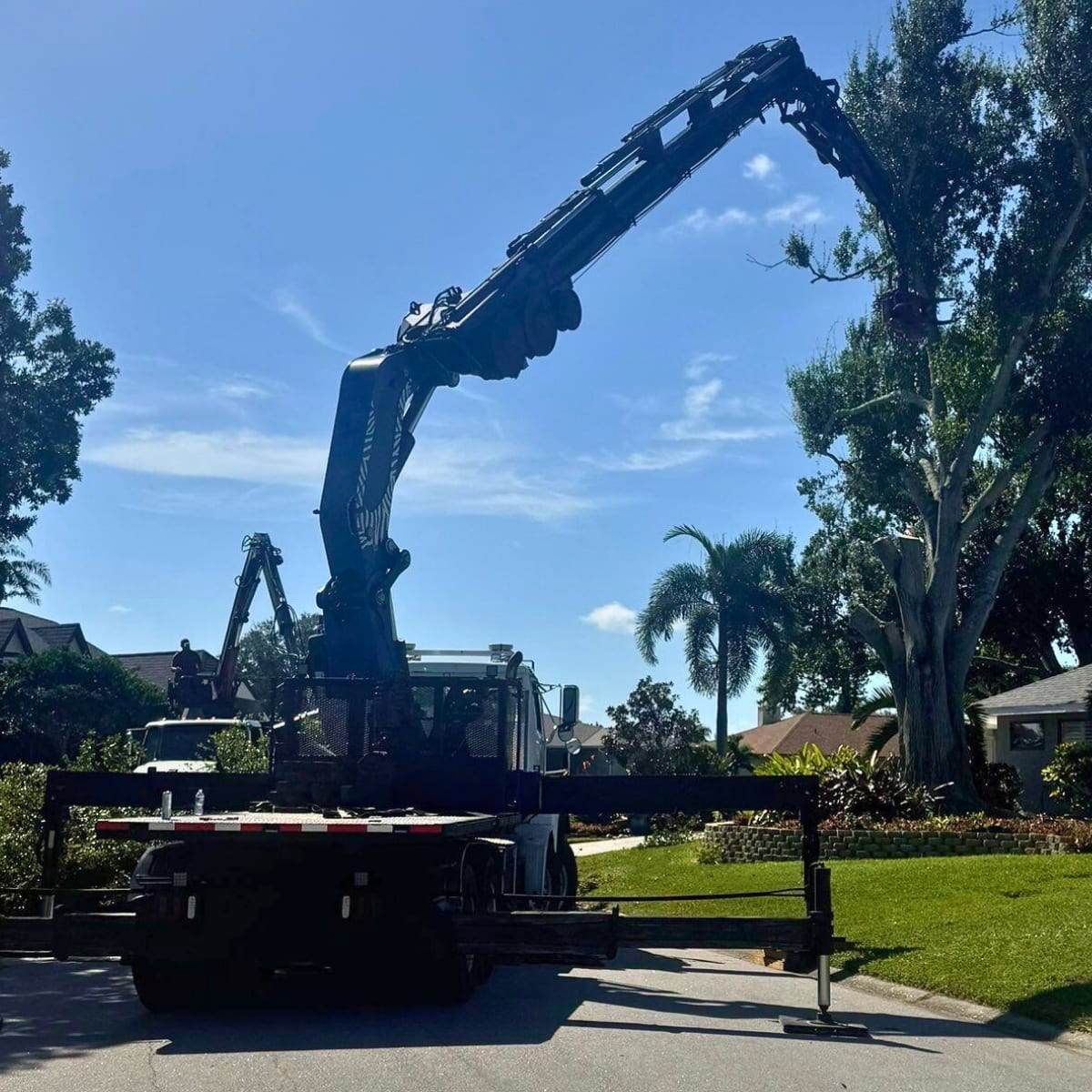
It is tempting to grab a chainsaw and tackle those low-hanging limbs yourself. For small branches, that’s fine. But when it comes to storm-readying a large canopy, the equipment required goes far beyond what you can rent at a big-box store. Professional crews use high-tensile rigging ropes, pulleys, and port-a-wraps to lower heavy wood without letting it crash onto your lawn. They also utilize bucket trucks and cranes to reach limbs that are inaccessible by ladder. More importantly, they carry liability insurance. If a limb goes through your roof while a pro is working, their insurance covers it. If you do it yourself, you’re on the hook for the deductible and the damage.
To ensure your home stays protected, My Florida Tree Guys, Jacksonville, offers expert arborist-led assessments and 24/7 emergency removal services. Their OSHA-certified crew specializes in difficult storm-prep removals near power lines and structures, providing the exact documentation needed to comply with Florida Statute 163.045. With 15 years of experience and flat-rate pricing, they help Callahan homeowners manage storm risks safely and affordably. Call (904) 442-8212 today for a free estimate before the next storm hits.
Frequently Asked Questions
When should I start my hurricane prep?
Ideally, you want to have everything handled by May. Once June hits and the first name is called on the news, every tree service in Northeast Florida will have a three-week waiting list.
Is a leaning tree always a danger?
Not necessarily. Many trees grow with a natural lean toward the sun. What you need to worry about is a new lean or soil that is cracking and lifting at the base.
Will my insurance pay to remove a dangerous tree before it falls?
Rarely. Insurance companies generally only pay for removal if the tree has already caused covered damage to a structure. Pre-emptive removal is a maintenance cost that saves you from a much larger deductible later.
What is the most dangerous tree species in our area?
Loblolly pines and Laurel Oaks tend to fail more often than Live Oaks. Live Oaks are built for this weather, but they still need to be thinned out to stay safe.
Do I need to remove my palm trees?
Rarely. Palms are incredibly resilient in high winds. Just make sure to trim off any dead brown fronds so they don’t blow away and clog up your neighborhood’s storm drains.
Can I trim branches that hang over from my neighbor’s yard?
Yes. In Florida, you have the legal right to trim any branches that cross your property line as long as you don’t cross the line yourself or kill the tree in the process.
How do I know if a tree is hollow?
A professional arborist can use a rubber mallet to listen for a hollow sound or use specialized tools like a tomograph to check the density of the wood.
What should I do if a tree is touching power lines?
Stop. Do not touch it or try to trim it. Call JEA or your local utility provider immediately. Only crews with specific electrical hazard training should work near lines.
Summary Checklist: Callahan Tree Removal Summary Guide
| Category | Regulation / Condition | Key Requirement |
|---|---|---|
| Hazardous trees | Florida statutory hazard tree provisions | A documented professional risk assessment may be required when removing trees considered an immediate safety hazard |
| Specimen trees | Local county or municipal preservation ordinances | Large protected trees may require formal approval before removal, with penalties for unauthorized work |
| Protected native species | Local tree protection rules | Healthy protected canopy species may require permits unless removal is justified by documented safety concerns |
| Residential properties | State and local property regulations | Hazard-based removals may follow different requirements than elective removals, depending on jurisdiction |
| Commercial properties | County-regulated development and landscape codes | Commercial tree removal often requires formal permitting and regulatory review before work begins |
| New construction projects | Land development approval requirements | Tree removal may need approval as part of the site plan, grading, or building permit process |
| Emergency situations | Immediate public safety threats | Emergency removal may be allowed for storm-damaged or failed trees, with documentation recommended |
| Stump grinding | Post-removal maintenance work | Stump grinding requirements may differ from tree removal permits depending on local rules |