01/19/2026
Reviewed by a Professional Arborist
Living in Duval and Nassau counties offers a distinct gardening advantage: we can grow a lush mix of temperate forest trees and exotic tropicals. You will see massive Southern Live Oaks draped in Spanish moss just streets away from delicate Robellini palms and fruit-bearing citrus trees. However, this diversity comes with a hidden risk. Our winters are generally mild, which can lull homeowners into a false sense of security. Implementing proper cold-weather tree care is essential to protecting your landscape investment.
Key Takeaways
- Hydration Is the First Line of Defense: Wet soil holds heat better than dry soil. Deep watering 24 hours before a freeze can save your trees.
- Insulate the Root Zone: A proper layer of organic mulch acts like a thermal blanket for roots, which are often the most vulnerable part of young trees.
- Know Your Tree Species: Native trees like Live Oaks rarely need help, but “transplant” species like Queen Palms and Meyer Lemons require active protection.
- Don’t “Panic-Prune”: Cutting branches immediately after a freeze often causes more damage. Patience is key to recovery.
- Professional Help Matters: For hazardous limbs or large-scale protection, My Florida Tree Guys offers 24/7 emergency services and specialized assessments.
When a polar air mass pushes down into North Florida, temperatures can drop from the 70s to the 20s in less than 24 hours. This rapid shift is dangerous because plants often haven’t had time to “harden off” or go dormant. Preparing your trees for these events isn’t just about saving next year’s lemons; it is about protecting the structural integrity of your landscape and avoiding thousands of dollars in removal costs.
This guide provides a detailed, step-by-step approach to cold-weather tree care, focusing on practical methods that work in our specific microclimate.
Understanding Cold Stress: What Happens Inside Your Tree?
To protect your trees, it helps to understand what actually hurts them during a freeze. You don’t need a degree in botany to grasp the basics.
Trees are filled with fluids, specifically water and sugars, that transport nutrients throughout the plant. When temperatures drop below freezing (32°F), the water inside the tree’s cells can turn into ice crystals. Think of what happens when you put a soda can in the freezer; the liquid expands and bursts the can. A similar process happens inside plant cells. If ice forms inside the cells, it ruptures the cell walls, killing that part of the tissue.
Radiational Freeze vs. Advective Freeze
In Duval County, we experience two main types of cold events:
- Radiational Freeze: This happens on calm, clear nights when heat from the ground escapes up into the atmosphere. This is when you see frost on your roof or grass. Covering trees works well here because the cover traps the ground heat.
- Adiabatic Freeze: This is caused by a cold front moving in with high winds (like a winter storm). The wind strips away heat instantly. Covers are harder to use here because they blow away, and the cold penetrates more deeply.
The Pre-Freeze Checklist: 72 Hours Before
Effective protection starts well before the temperature drops. If you wait until the evening news issues a freeze warning, you are already behind.
1. Deep Watering (The Thermal Bank)
Water is a unique substance because it can hold a massive amount of heat. Dry soil chills rapidly, allowing cold air to penetrate deep into the root zone. Wet soil absorbs heat from the sun during the day and releases it slowly overnight.
- The Strategy: Thoroughly water your trees 24 to 48 hours before the freeze is expected.
- How Much: Aim for a slow, deep soak rather than a quick spray. For young trees, leaving a hose on a slow trickle for 30 minutes at the base is effective.
- Critical Warning: Turn off your automatic sprinklers during the freeze itself. If your system runs while it is 28°F outside, the water will freeze on the branches. The weight of this ice can snap limbs and tear down power lines.
2. Mulching Properly
Mulch is the winter coat for your tree’s roots. In North Florida, our soil doesn’t usually freeze solid, but the top few inches can get cold enough to damage the fine feeder roots that sit near the surface.
- Best Material: Use organic mulches common to our area, such as pine straw, pine bark, or wood chips. These materials trap air pockets, which are excellent insulators.
- Application: Apply a layer 3 to 4 inches deep. Extend this layer as far out as the “drip line” (the edge of the canopy) if possible.
- The “No Volcano” Rule: Never pile mulch up against the trunk of the tree. This traps moisture against the bark, which can cause rot and invite insects. Always leave a 2-inch gap between the mulch and the trunk.
3. Clear the Area
Move potted plants indoors or into a garage. For planted trees, remove any weeds or turf grass growing directly under the canopy. Bare soil (or mulched soil) absorbs more heat during the day than grass does.
Active Protection Methods: During the Freeze
When the sun sets and the temperature begins its plunge, active protection measures are required for your sensitive species.
The “Tent” Method for Covering
Covering a tree isn’t about wrapping it like a burrito; it is about building a tent to trap earth warmth.
- Materials: Use breathable fabrics. Old bed sheets, burlap sacks, or specialized commercial “frost cloth” are perfect. Never use plastic. Plastic traps moisture against the leaves, which can freeze and cause “cold burn,” often doing more damage than the cold itself.
- Technique: The cover needs to extend all the way to the ground. You are trying to capture the heat radiating out of the soil. If you tie the cover around the trunk (like a lollipop), you cut off the heat source.
- Support: For small trees or bushes, the cover can rest on the leaves. For slightly larger trees, use stakes or a PVC frame to hold the cloth up. This prevents the weight of dew or frost from breaking delicate branches.
- Secure It: Use bricks, heavy stones, or landscape staples to pin the edges of the cloth to the ground so the wind doesn’t lift it.
Adding a Heat Source
For high-value tropicals or during extreme freezes (low 20s), a cover might not be enough. You can add a safe heat source inside your “tent.”
- Christmas Lights: A string of old-fashioned C7 or C9 Christmas bulbs (the ones that get hot) can generate enough warmth to keep the internal temperature a few degrees above freezing.
Note: Modern LED lights do not produce heat and will not help.
- Safety First: Ensure the lights are rated for outdoor use and are not touching dry leaves or flammable mulch.
Banking Citrus Trees
If you have young citrus trees (lemon, lime, orange) grafted onto rootstock, the most critical part to save is the graft union: the scar near the bottom of the trunk.
- The Method: Mound clean soil or mulch up around the trunk, covering the graft union completely.
- Why: Even if the top of the tree freezes and dies back, if the graft union survives, the tree can regrow the variety of fruit you want. If the graft dies, the regrowth will likely be a sour wild citrus from the rootstock.
- Aftercare: You must carefully wash this soil away once the warm weather returns to prevent trunk rot.
Species-Specific Guide for Northeast Florida
Not all trees in Jacksonville are created equal. Knowing what you have helps you prioritize your efforts.
1. The “Tough Guys” (Native & Hardy)
These trees evolved in our climate and generally require no action unless they are very young seedlings.
- Southern Live Oak: The king of the canopy. Virtually freeze-proof in our zone.
- Sabal Palm (Cabbage Palm): Our state tree. It can handle temps down to 15°F.
- Bald Cypress: Loses its needles in winter anyway, so it is naturally dormant.
- Crape Myrtle: Also dormant in winter.
- Southern Magnolia: Its thick, waxy leaves protect it from cold wind.
2. The “Sensitive Types” (Require Monitoring)
These grow well here but can be “burned” by frost.
- Sylvester Palm: A popular landscape palm. Hardy to about 20°F, but frost can spot the leaves.
- Pindo Palm: Very hardy, usually safe, but young ones can be damaged.
- Loquat: Hardy, but the fruit or flowers can be lost in a freeze.
- Bottlebrush: Tips may burn, but it usually recovers.
3. The “Tropicals” (Action Required)
If you have these, you must protect them if the temperature drops below 32°F.
- Queen Palm: Very popular but very sensitive. Freezes can kill the “heart” (the growing bud). If the heart freezes, the whole tree dies.
- Robellini (Pygmy Date) Palm: Common in lanais. Highly sensitive to frost.
- Citrus (Lemon, Lime, Grapefruit): Lemons and limes are the most tender. Kumquats and Satsumas are tougher but still need care.
- Hibiscus & Bougainvillea: These will almost certainly lose their leaves in a freeze. Cover them to keep the stems alive.
Common Mistakes to Avoid
Even well-meaning homeowners can accidentally harm their trees while trying to help.
The Mistake of “Pre-Pruning”
Do not prune your trees heavily in the fall or early winter. When you prune a tree, you send a signal to the plant to heal the wound and grow. This stimulates new, tender growth. This fresh green growth has zero defense against the cold and will be destroyed by the first frost.
- Exception: You should always remove dead, broken, or hazardous limbs. If a branch is already dead, removing it makes the tree safer. This is why our Hazardous Tree Removal service is active year-round.
The Fertilizer Trap
Do not fertilize your trees with high-nitrogen products after September. Nitrogen promotes rapid leafy growth. You want your tree to slow down and go dormant for winter, not speed up. Save the fertilizer for late February or March.
Premature Cleanup
After a freeze, your tropical plants might look terrible, with brown, mushy leaves and drooping stems. Do not cut them yet. Those dead leaves look ugly, but they are providing a layer of insulation for the living green stems underneath. If you cut the dead parts off immediately, you expose the remaining live tissue to the next freeze. Wait until spring (usually mid-March) when you see new green buds forming. Then you can prune away the dead material.
Post-Freeze Recovery: Bringing Them Back
Once the cold snap is over and temperatures rise back to the 60s or 70s, your work isn’t quite done.
- Remove Covers: Take off blankets and tarps immediately the next morning. If the sun hits a covered tree, it can create a greenhouse effect, overheating the plant.
- Water Again: The freeze may have dried out the soil. Check the moisture level. If it is dry, give the tree a drink to help it rehydrate.
- Assess, Don’t Act: Inspect the tree for cracks in the bark or splitting limbs. If you see large structural cracks, this is a safety hazard. Call a professional.
- Patience: Some trees, especially palms, can take months to show recovery. A palm might look dead in January but push out a green frond in May. Give them time.
Long-Term Prevention: Right Plant, Right Place
The best way to handle cold weather is to plan for it before you plant. The “Right Plant, Right Place” philosophy is central to Florida-Friendly Landscaping™.
If you live in a low-lying area of Callahan or Hilliard, cold air will settle in your yard, creating a “frost pocket.” You are likely 3 to 5 degrees colder than a neighbor at the beach. In these areas, avoid planting delicate tropicals like Coconut Palms or Royal Palms; they simply won’t survive long-term.
Instead, choose “zone-appropriate” trees. For a tropical look that survives the cold, consider:
- Mule Palm: A hybrid that looks like a coconut palm but is cold-hardy.
- European Fan Palm: Extremely tough and cold-resistant.
- Windmill Palm: Can handle snow and ice without issue.
How My Florida Tree Guys Can Help
While many cold prep tasks are DIY-friendly, some situations require professional intervention. Tree care can be dangerous, and assessing risk requires a trained eye.
Professional Risk Assessment
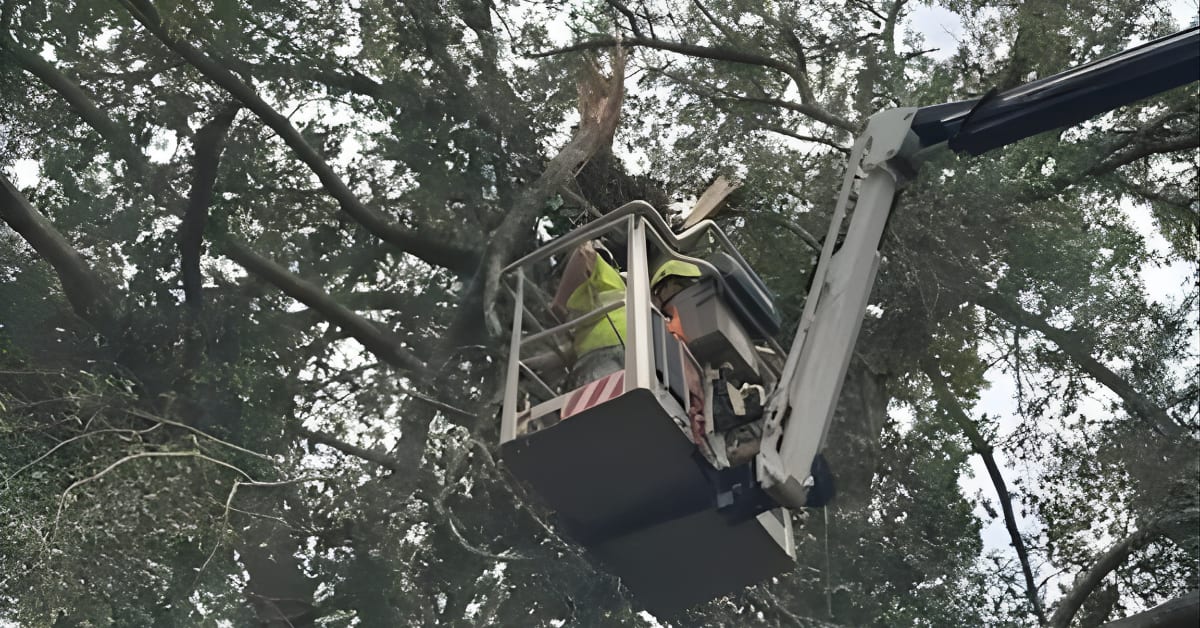
Before winter storms arrive, it is wise to have a Professional Arborist inspect your large canopy trees (Oaks, Pines, Maples). We look for:
- Weak Branch Unions: V-shaped forks that are prone to splitting.
- Deadwood: Heavy dead branches that will snap in winter winds.
- Root Issues: Signs of decay that could lead to toppling in a storm.
Hazardous Tree Removal
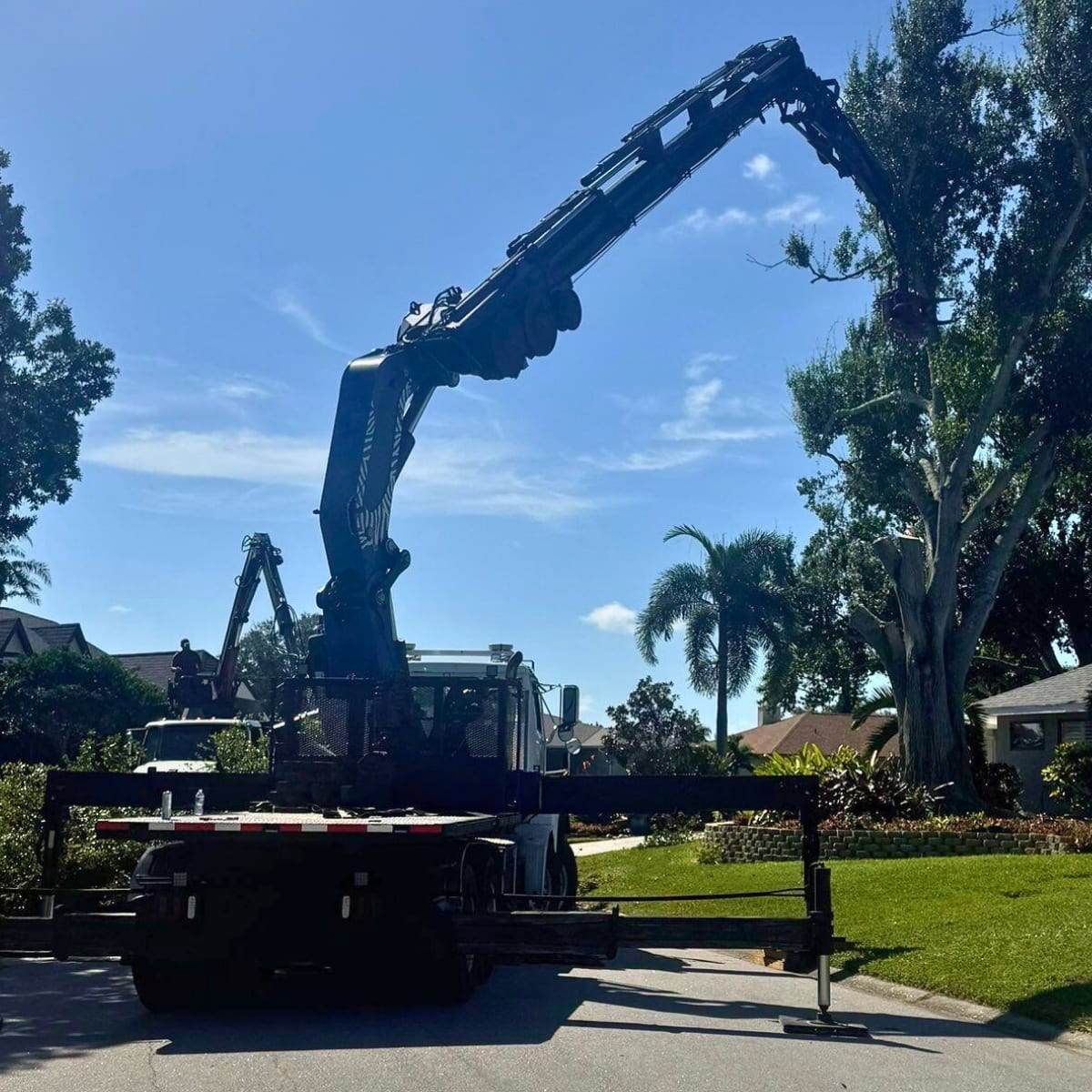
If a tree has been severely damaged by a freeze or storm, it may become unstable. A dead pine tree, for example, becomes brittle very quickly. My Florida Tree Guys utilizes Crane-Assisted Tree Removal for these dangerous scenarios. The crane allows us to lift the tree apart piece by piece without dropping heavy logs onto your lawn or near your home.
The No-Surprise Guarantee
We know that maintaining a property is expensive. That’s why we offer a No-Surprise Guarantee. When we give you a quote for tree protection, pruning, or removal, that is the price you pay. No hidden fees, no last-minute upcharges. We value clear, transparent communication.
Frequently Asked Questions
How early should I start preparing my trees for cold weather in Jacksonville?
Begin preparations 48 to 72 hours before a freeze. Early watering and mulching help protect the root zone and reduce cold stress. Waiting until temperatures drop offers far less protection.
Do all trees in North Florida need freeze protection?
No. Native species like Live Oaks and Bald Cypress tolerate cold well. Sensitive trees such as Queen Palms, Robellini Palms, and citrus require active protection when temperatures approach 32°F.
Can covering my trees during a freeze really make a difference?
Yes. A properly installed cover that reaches the ground traps heat rising from the soil and can raise temperatures a few critical degrees. Avoid plastic touching the foliage, as it can cause freeze burn.
Should I prune my trees before a cold front?
Avoid major pruning in fall or early winter. Fresh cuts stimulate new growth that freezes easily. Only remove dead or hazardous limbs if they pose a safety risk.
How do I know if a tree is damaged after a freeze?
Wait for warmer weather, then check for cracking bark, broken limbs, or wilted new growth. Palms may take weeks to show recovery. Structural damage should be assessed by a professional.
When should I call a Professional Arborist in Duval County?
If a large tree is leaning, shows decay, or hangs over a structure or power line, professional evaluation is recommended. An arborist available on our team can determine whether pruning, treatment, or removal is the safest option.
About My Florida Tree Guys
My Florida Tree Guys is a locally-owned and operated tree service dedicated to the safety and beauty of Northeast Florida landscapes. We are based in Callahan, FL, and proudly serve Jacksonville, Duval County, Nassau County (Callahan, Hilliard, Fernandina Beach, Yulee), Clay County (Middleburg, Orange Park), and Bradford County (Starke).
We are not just “guys with a truck.” We are a professional operation with:
- 9 Years in Business and Decades of Combined Experience.
- Full Licensing and Insurance: We are Licensed, Bonded, and Insured, protecting you from liability.
- Specialized Equipment: From cranes to stump grinders, we have the right tools for the job.
We Are Here When You Need Us:
- Emergency Service: 24/7 Availability for storm damage and urgent removals.
- Phone: (904) 442-8212
- Estimates: Free Consultations and Virtual/Phone Estimates are available.
Don’t let the winter weather catch you off guard. Whether you need a pre-winter safety prune or emergency removal after a storm, count on the My Florida Tree Guys team to handle it safely, efficiently, and for the price we quoted.